Clinical Trials at OU Health Stephenson Cancer Center Are Giving Glioblastoma Patients a Second Chance
- Category: Blog
- Posted On:

When Mike Schuster woke up in the back of an ambulance the day before Thanksgiving in 2014, he had no idea what was happening.
The 50-year-old Norman, Oklahoma, resident had been healthy all his life. No medical issues. No warning signs. One moment he was at his desk finishing up work for the holiday weekend, and the next, he was being rushed to the hospital after a seizure.
An MRI revealed a brain tumor the size of a golf ball.
"I've been healthy all my life," Mike said. "I just couldn't believe this was happening."
The diagnosis was glioblastoma, one of the most aggressive forms of brain cancer. The five-year survival rate for glioblastoma is just 5% to 13% and the average life expectancy after diagnosis is measured in months, not years.
Today, more than 10 years later, Mike is celebrating his 60th birthday. He has watched his sons graduate from college and law school. He has seen his oldest son get married. He has two grandchildren, with another wedding to look forward to soon.
"I can't believe I got to see all that," Mike said. "I remember thinking I wouldn't be able to see my kids grow up, that I'd miss all the big moments. The grandkids, all that stuff."
What made the difference? A clinical trial at OU Health Stephenson Cancer Center.
When Standard Treatments Aren't Enough
After the initial surgery, Mike went through 31 rounds of radiation and oral chemotherapy at Stephenson Cancer Center. His wife, Teresa, who works at the University of Oklahoma, helped connect him with OU Health neuro-oncologist Dr. James Battiste, M.D., Ph.D., associate professor in the Department of Neurosurgery at the University of Oklahoma College of Medicine, who has become a leader in brain tumor research.
For a year, things looked promising. Then an MRI showed the cancer had returned.
"That was devastating," Mike said.
Mike underwent additional surgeries, including a procedure where he stayed awake while doctors carefully removed tumor fragments.
That willingness to explore every option led Mike to a clinical trial being conducted at Stephenson Cancer Center. The trial featured a drug called OKN-007 that was developed by the Oklahoma Medical Research Foundation right here in Oklahoma.
"I kept telling Dr. Battiste, if you got any experimentals, I'm willing to do them," Mike said. "He said, ‘Well, I got one more to try if you want.’ And it was working."
The Power of an Academic Health System
Mike's story shows what it means to have an academic health system right here in Oklahoma. OU Health, the University of Oklahoma's academic health system, brings together patient care, research and education. This means patients don't have to leave Oklahoma to access the most advanced treatments.
Stephenson Cancer Center is Oklahoma's only National Cancer Institute-Designated Cancer Center. Fewer than 75 cancer centers in the entire country have earned this recognition. The designation means Stephenson Cancer Center meets the highest standards for scientific research, clinical care and community outreach.
"Since we can successfully show standards like this, we get more access to more clinical trials," Dr. Battiste said. "It's one good thing leading to another. We get more access to allow patients to get these more advanced drugs. Hopefully that means improved care and successful outcomes."
Stephenson Cancer Center currently ranks in the top 10 among all cancer centers in the nation for the number of people taking part in clinical trials sponsored by the National Cancer Institute. Researchers work on more than 400 cancer research projects, supported by $60 million in annual funding from sources like the National Institutes of Health and the American Cancer Society.
Understanding What Made the Difference
Dr. Battiste and his team continue to study why some patients respond so well to certain treatments. In Mike's case, researchers believe there may have been something special about his tumor that made it more likely to respond to the clinical trial treatment.
"We're trying to figure out why Mike responded so well," Dr. Battiste said. "There's got to be some genetic factor, some factor in this tumor. Glioblastoma is one disease, but we know there are lots of different variations. Finding that variation would be key."
This kind of research matters because it helps doctors know which patients might benefit most from certain treatments. It also drives the development of new therapies that could help future patients.
"If we can really make an inroad in being able to treat this, then we've got hope for everything else being treated too," Dr. Battiste said.
Bringing Advanced Care Closer to Home
One thing Mike has noticed over the years is how many people travel from far away to get care at Stephenson Cancer Center. He remembers meeting a family from Tennessee in the waiting room.
"They traveled all the way from Tennessee to Stephenson," Mike said. "I guess they didn't want to go down to Houston."
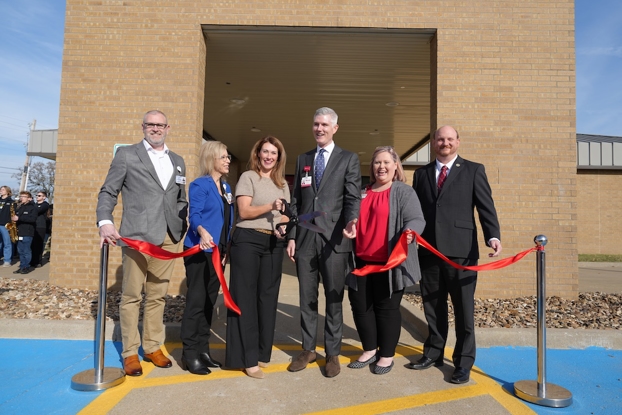
But not everyone can travel. That's why Stephenson Cancer Center is expanding across Oklahoma to bring advanced cancer care closer to where people live.
Why Clinical Trials Matter
Clinical trials are how new treatments move from the laboratory to patients. They test whether new drugs are safe and whether they work. Without people like Mike who are willing to try experimental treatments, medical science cannot move forward.
Not every clinical trial leads to a miracle. Dr. Battiste is honest about that. But sometimes there are patients who respond remarkably well, and those cases help researchers understand what works and why.
"Hopefully, there's one or two from clinical trials that really do amazing," Dr. Battiste said. "Mike's the one from this one."
When asked what he would tell others facing a cancer diagnosis, Mike talks about keeping an open mind about treatment options.
"I have people ask me all the time," he said. "I just tell them what I've done to try and keep it at bay."
The Best Care Without Leaving Oklahoma
Mike's experience shows that Oklahomans can receive outstanding cancer care without leaving the state. The tripartite mission of OU Health combines education, research and clinical care to give patients access to treatments that were once available only at a handful of medical centers across the country.
"I think Stephenson saved my life, actually," Mike says. "Everybody was fantastic. They made the experience nice, which is hard to say about cancer treatment."
When positive results emerge from clinical trials, it means those treatments can eventually become available to everyone. That's good for Oklahoma and good for the nation.
“Oklahoma can take pride in being the starting point for breakthroughs like this,” said Dr. Battiste. “As we make more progress, we begin to develop our own medications and attract pharmaceutical companies to set up here. This not only advances healthcare but also boosts our state’s economy by creating new businesses and jobs.”
Looking to the Future of Continued Care
Mike knows that glioblastoma can never truly be declared "cured." He still gets regular MRIs to make sure the cancer hasn't returned. But after more than a decade, he's living proof that hope is real.
"I've been so lucky," he said. "I got to see my oldest son get married. I have two grandkids now. My other son graduated from Georgetown Law. I've been very fortunate and blessed."
Dr. Battiste and his team continue their research, working to understand which patients respond best to different treatments and developing new clinical trials that could help future patients.
"We are always grateful when there are grateful patients and grateful families who donate or contribute to the research," Dr. Battiste said, pointing to the ability for people to donate to cancer research at OU Health. "There are ways people can get involved in the whole system. That support fuels the whole thing."
Take the Next Step In Healing
If you or someone you love is facing a cancer diagnosis, know that you have options right here in Oklahoma. Stephenson Cancer Center offers access to emerging treatments, clinical trials and some of the nation's best cancer specialists.
"If there's interest or need, then I would say just come see us at Stephenson Cancer Center," Dr. Battiste said. "We do have other things that are going on right now. Hopefully that combination will really push the field forward."
Because in Oklahoma, you don't have to travel far to find hope.
Learn more about clinical trials and treatment options at OU Health Stephenson Cancer Center, or call (405) 271-8001 to schedule an appointment. You can also request an appointment or second opinion online.
You can also support brain tumor research by donating to the Brain Cancer Research Fund through the OU Foundation website, searching for “brain cancer.”