How Advanced Robotic Surgery Transformed Ann’s Fight Against Lung Cancer
- Category: Blog
- Posted On:

The phone call that changed everything came on an ordinary December day in 2021. Ann Norton had been dealing with ongoing stomach issues since her gallbladder surgery earlier that year, but nothing hinted at what her CT scan revealed.
She had a 1-centimeter nodule lurking in her right lung.
“It was just an incidental finding,” said Ann. “They were looking at my stomach, and there it was. It just showed up in the picture.”
To Ann, a lifelong nonsmoker living quietly in Mustang, Oklahoma, with her husband, Larry, the diagnosis felt like a cruel twist of fate. The couple had moved to Oklahoma from North Carolina to help care for their granddaughter, never expecting their peaceful retirement would be upended by cancer.
Ann’s first consult painted a grim picture that would haunt any patient’s nightmares. The surgeon wanted to cut her open from the front of her body to up through her back shoulder blade, creating a massive incision that would require splitting her ribs. Recovery would be brutal: eight to 10 days in ICU, followed by weeks in the hospital.
The surgeon’s approach represented old-fashioned medicine, treating cancer like a war that requires overwhelming force, leaving patients to endure collateral damage for months. But Ann refused to accept that this approach was her only option.
“I’d already done research. I knew it could be done robotically or laparoscopically,” Ann said. “When I asked if he could do it that way, he said no. Well, I told him bye-bye.”
A Different Kind of Doctor, A Different Kind of Hope
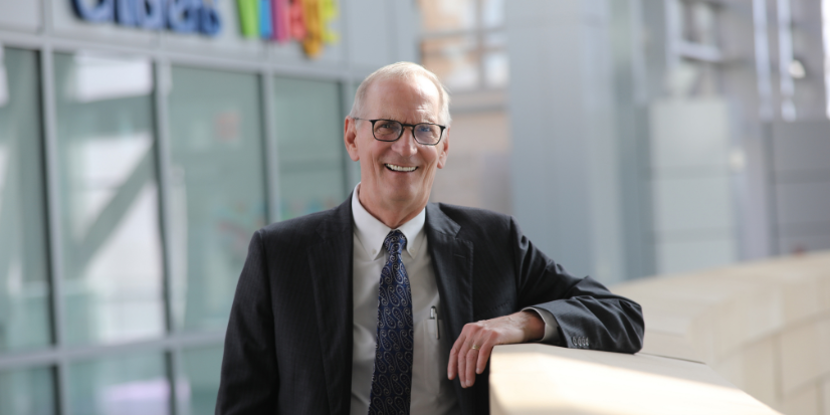
Within weeks, Ann found herself sitting across from OU Health Stephenson Cancer Center thoracic surgeon and thoracic surgical oncologist Dr. J. Matthew Reinersman, M.D., FACS, associate professor and chief of the Section of Thoracic and Foregut Surgery in the Department of Surgery at the University of Oklahoma College of Medicine. The contrast was striking.
“When I met Dr. Reinersman, I was like, ‘This man is amazing,’” Ann said. “His bedside manner is so down to earth. He comes in just wearing his blazer and sits down next to you. He’s very approachable.”
Dr. Reinersman is among the oncologists at OU Health, the University of Oklahoma’s academic health system, who are transforming cancer treatment. For them, precision matters more than brute force, innovation serves compassion, and patients go home the day after major surgery rather than spending weeks recovering from trauma.
“She had a small peripheral lung cancer, around a centimeter,” Dr. Reinersman said. “For patients like Ann who don’t have concerning findings in their lymph nodes, we have excellent options. Being the specialized center that we are, we’re very experienced at doing minimally invasive resections.”
The change in approach was significant. Instead of the massive incision the first surgeon proposed, Dr. Reinersman would use the robotic da Vinci Surgical System, making five tiny incisions, each smaller than a dime, with instruments so precise they could operate in spaces where traditional surgery would be impossible.
“We originally did these procedures thoracoscopically with three little incisions,” Dr. Reinersman said. “Now we’ve migrated to doing them robotically. The incisions are smaller and positioned lower in the chest where the rib spaces are wider. In theory, this leads to less pain and fewer complications.”
The Surgery That Made a Difference
Ann’s surgery was scheduled for March 2022. Even with the promise of minimally invasive treatment, fear crept in the night before when stress triggered her chronic shingles. While hospital staff panicked, Dr. Reinersman remained calm.
“He came and looked at the tiny spots and said, ‘This is nothing. We’re doing surgery,’” Ann said. “That confidence meant everything.”
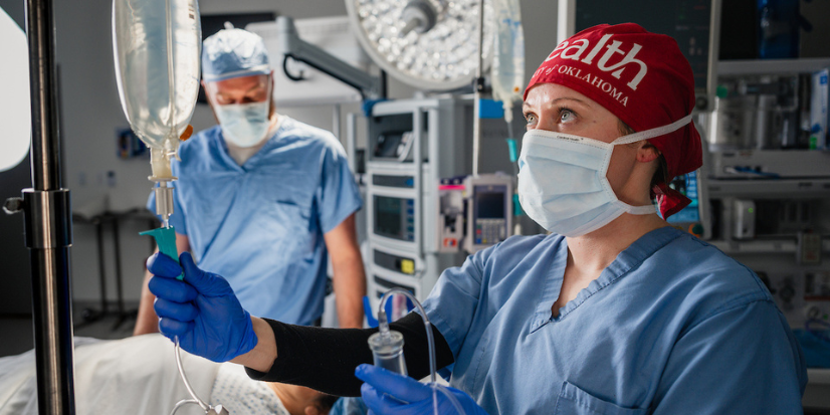
The next morning, Ann was wheeled into one of the most technologically advanced operating rooms in Oklahoma. Dr. Reinersman, seated at a console that looked more like a flight simulator than medical equipment, guided robotic arms with movements so precise they eliminate the natural tremor of human hands.
The surgery that once meant weeks of recovery took just hours. Dr. Reinersman removed Ann’s entire right lower lobe, ensuring every trace of cancer was gone while preserving as much healthy lung tissue as possible.
“She spent one night in ICU,” Dr. Reinersman said. “I told her I could put her in a regular room, but the ICU nurses are better suited for her recovery.”
Ann went home the next morning, less than 24 hours after major cancer surgery.
“I couldn’t believe it,” Ann said. “I had five little incisions, and then one that was a little bigger where they removed the lobe through the chest tube. I was sore, but it wasn’t bad.”
Leading the State in Innovation
Ann’s experience is just one successful surgery, exemplifying the breakthrough care that sets OU Health apart as Oklahoma’s academic health system. While many community hospitals still use older surgical approaches, OU Health has been pioneering minimally invasive techniques for years.
“For the first five or six years I was here, we were really the only ones doing this,” Dr. Reinersman said. “Now other places have started doing more of it, but we were the forerunners to offering this kind of complex, less invasive surgery.”
The numbers speak volumes about the difference this approach makes. According to Dr. Reinersman’s data, about 75% of patients who undergo robotic lobectomy or segmentectomy at OU Health go home within the first two days — 25% the first day and 50% the second day.
“That is three-quarters of patients staying only a night or two in the hospital,” Dr. Reinersman said, a statistic that would have seemed impossible just a generation ago.
The benefits continue. Patients who recover quickly can begin chemotherapy sooner if needed, getting them back to their normal lives faster and improving their overall outcomes.
The Power of Academic Medicine
What makes this level of care possible is OU Health’s distinction as an academic health system, where world-class patient care, groundbreaking research, and medical education come together to push the boundaries of what’s possible.
“We have doctors who only deal with these things in a narrow specialty, and we're the experts,” Dr. Reinersman said. “You can go to another oncologist in the community, but that oncologist is going to see breast and colon and GI stuff and leukemia and brain cancers and lung cancer. Our medical oncologists only deal with a narrow window where they might just deal with lung cancer and melanoma.”
This specialization matters. Research shows that patients who receive fragmented care (surgery at one hospital and follow-up treatment at another) have lower survival rates than those who receive coordinated care at an academic health system like OU Health.
“We do clinic together, we talk about patients all the time, and we can easily see each other’s patients the same day if needed,” Dr. Reinersman said.
Never Done, Never Outdone
Today, more than two years after her surgery, Ann remains cancer-free. She continues to receive regular scans every few months, but the vigilance feels manageable now rather than terrifying.
The Nortons' relationship with OU Health has deepened beyond Ann's treatment. Her husband Larry, a lifelong smoker who never experienced symptoms, recently began participating in Stephenson Cancer Center’s comprehensive lung cancer screening programs. His annual screenings have already detected two types of emphysema, allowing him to begin treatment before symptoms develop.
"There are so many medications now for emphysema," Ann said. "We need to get on this before it gets worse."
Larry's proactive screening is exactly the kind of early detection that Stephenson Cancer Center champions through initiatives like the mobile lung screening program, catching conditions before they become life-threatening and giving patients the best possible outcomes through preventive care.
“We feel like we’re related to a lot of these people here,” Larry said about the ongoing relationship with their care team. “You get to know a lot of the staff, and they get to know you.”
Ann has returned to the life she loves, tending her vegetable garden, spending time with her granddaughter, and looking forward to the arrival of another grandchild. The future that once seemed uncertain now stretches ahead with promise.
For Dr. Reinersman and his colleagues, Ann’s story encompasses the mission that drives them every day, bringing breakthrough discoveries from the research lab directly to patients across Oklahoma and beyond.
“What we want to do with all the lung cancer screening and these kinds of minimally invasive resections is offer patients more curative options,” Dr. Reinersman said. “We want to be able to diagnose their cancer sooner and offer them more surgical options.”
As Oklahoma’s academic health system, OU Health leads medical advances. For patients like Ann, that leadership means the difference between months of painful recovery and returning home the day after surgery, between living in fear and embracing hope.
Never done, never outdone. For Ann Norton and countless others, those aren’t just words. They’re a promise kept.
Explore how OU Health’s academic medicine and NCI-Designated cancer care are redefining what’s possible for patients like Ann at OU Health Stephenson Cancer Center. Discover the difference that expert-led, research-driven, and compassion-centered care can make — right here in Oklahoma. Request an appointment online or call (855)750-2273.