Rebuilding a Heart: How OU Health’s Groundbreaking Aortic Surgery Saved Perry’s Life
- Category: Blog
- Posted On:
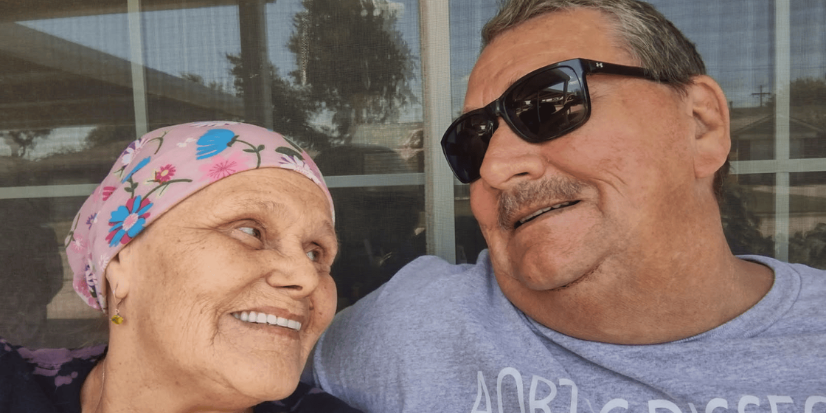
Perry and Sue Bridges have been together for 45 years, a love story that has weathered life’s greatest storms. But none tested their bond more than Perry’s 13-year battle with a life-threatening heart condition that left them wondering if each day might be their last together.
“We’ve been in this journey together, and we’re going to finish it to the end together,” Sue said as she sat beside her husband at OU Health.
Their story began on September 20, 2013, when Perry woke up with severe chest pains at their Midwest City, Oklahoma, home. Sue drove “like a maniac” to get him to OU Health’s ER. There, doctors discovered he had an aortic dissection, a dangerous condition in which the main artery carrying blood from the heart begins to tear apart, like wallpaper peeling from a wall.
“The top of the aorta was getting ready to blow,” Sue said about the emergency that nearly claimed Perry’s life. “If it ruptures, you’re pretty much done.”
The Beginning Steps on a Long Road to Recovery
The emergency surgery to repair the tear in Perry’s aorta saved his life, but it was the beginning of a complex medical journey that lasted more than a decade. It was during this 12-hour surgery that doctors discovered Perry also needed one of the valves in his heart replaced. The problem was they couldn’t find one large enough, so they chose a bovine valve, made from the tissue of a cow’s heart. The intricate surgery required stopping Perry’s heart while a machine kept blood flowing to his brain and other vital organs.
Perry spent 21 days in a coma and required 24-hour care from two specialized nurses, the only patient in OU Health’s history to need such intensive monitoring. He had to be revived three times after his heart stopped and battled multiple infections that required additional surgeries.
“I never left his side at the hospital,” Sue said. “We call him a hybrid because he’s got everybody’s blood in him now,” referring to the many transfusions Perry needed.
After surviving the initial crisis, Perry’s condition continued to get worse over the years. Although surgeons repaired the top part of the aorta, the tear extended farther down the artery and gradually spread from his chest to his groin. This created what doctors call a “false lumen,” an abnormal channel where blood can collect and cause a dangerous bulge.
In 2016, Perry turned to OU Health University of Oklahoma Medical Center, where surgeons performed a stent repair for an enlarging thoracic aortic aneurysm, and began surveillance of the rest of Perry’s aorta.
By 2023, Perry’s abdominal aorta, including the visceral segment had bulged to 6.3 centimeters, well beyond the 5.7-centimeter threshold that typically requires surgical repair. Without intervention, Perry faced almost certain death from rupture.
When Hope Seemed Lost
For years, Perry and Sue lived with the constant fear that his aorta could rupture at any moment. The couple, who had always dreamed of traveling together, stayed close to home because they were afraid Perry might collapse and die far from medical help.
“We were afraid to go anywhere because we didn’t know if we were going to make it back,” Sue said.
The situation became even more heartbreaking when doctors told them that the complex surgery Perry needed wasn’t yet available in Oklahoma City. He would have to travel to Texas for treatment, a prospect that seemed impossible for the couple, both financially and emotionally, and physically overwhelming for Perry.
“We both agreed I would not survive that in that condition,” Perry said of the open-chest surgery that would have been required. “We just decided to take it as it comes, day by day.”
Everything changed in February 2024 when Perry met with OU Health vascular surgeon Dr. Benjamin Chou, D.O., assistant professor in the Department of Surgery at the University of Oklahoma College of Medicine. Dr. Chou specializes in complex aortic procedures that, until then, hadn’t been available in Oklahoma.
“I actually asked during my interview at OU Health, ‘What happens to some of these patients?’” Dr. Chou said. “The answer was they either get transferred out of state or they die. I immediately saw that there was a gap in the care that we’re able to provide to Oklahomans.”
Dr. Chou was trained in advanced techniques that could repair a damaged aorta without opening the chest. He would perform Perry’s procedure using surgical devices inserted through small incisions in the groin and arm, a much safer approach for someone in his condition.
When Perry and Sue met Dr. Chou, they felt hope for the first time in years.
“When we first met Dr. Chou, he sat down and told us what he had to offer, and Perry and I looked at each other and said, ‘Oh, my God, he’s got a chance. Perry’s got a chance,’” Sue said. “And that’s all we wanted.”
Pioneering Procedures in Oklahoma
Dr. Chou determined that Perry would need a two-stage repair using newer techniques. The first procedure, called a “hot wire septostomy,” would help increase the diameter of Perry’s aorta so that a second procedure could be performed. The second surgery would involve a PMEG (physician-modified endograft), essentially a custom-made tube designed specifically for Perry’s anatomy.
“These are all experimental procedures that are a compassionate use for patients that don’t have any other options,” Dr. Chou said. “It’s super technical and it’s very complex, but at the end of the day, we were able to help them out.”
The first surgery took place on April 30, 2024, the day before Perry’s birthday. The second procedure followed on June 6. Despite the complexity and risk, both surgeries were successful. Perry became the second person in the United States to receive this complete aortic reconstruction using these advanced techniques.
“Perry is essentially completely rebuilt,” Sue said proudly.
A Team Effort Creates Success
Dr. Chou emphasized that Perry’s successful outcome was the result of an entire team working together.
“I can’t do this without the support of OU Medical Center,” he said. “The interventional radiology staff, technicians, ICU nurses, and the critical care physicians and everyone on the team make this happen. I’m just one person.”
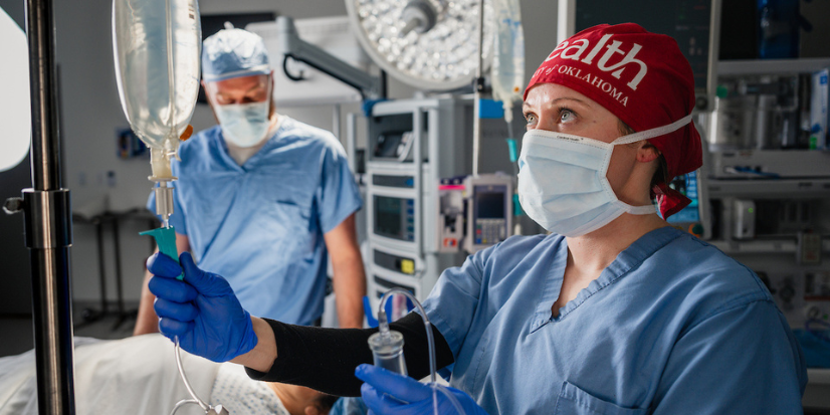
The coordinated care extended beyond the surgical team to include specialized cardiac anesthesia, intensive care specialists, and support staff, who all played crucial roles in Perry’s recovery.
The transformation in Perry’s condition was almost immediate. His kidney function improved from 20% to 80% after the surgery. For the first time in years, Perry and Sue could make plans for their future without the constant fear of his aorta rupturing.
“Now he doesn’t have to worry about his aorta anymore,” Dr. Chou said. “He can focus on other aspects of his health.”
Perry will need yearly follow-up appointments to monitor his rebuilt aorta, but the couple is finally free to pursue their dream of traveling together.
“Before, we were afraid to go because we didn’t know if we were going to make it back,” Sue said. “I don’t have to worry about him falling over dead. That’s the bottom line, and Dr. Chou made that possible for us.”
Bringing Advanced Care to Oklahoma
Perry’s case represents a milestone for healthcare in Oklahoma. Before Dr. Chou’s arrival, patients needing complex aortic procedures had no choice but to seek treatment out of state, if they could afford it.
“I now give other vascular surgeons in the state an option of where to send their patients,” Dr. Chou said. “I think it lets the patients know that there is a solution for them here in Oklahoma.”
Dr. Gierman noted the importance of having these capabilities available locally.
“It gives patients freedom to not have to go to other states to seek treatment. Those patients might go get procedures in other states, but then they have [to] go there for their follow-up too,” he said. “It becomes a burden.”
OU Health continues its focus on complex aortic care with education and awareness as key components. Historically, patients have had to leave the state for complex aortic treatment. Many, including some physicians, still don’t realize that advanced options are now available locally. This lifesaving care close to home is essential in Oklahoma, where high rates of tobacco use and diabetes contribute to vascular disease.
“If you have a complex aortic problem, there is now a solution here in Oklahoma for you,” Dr. Chou said. “You don’t have to go untreated. You don’t have to go to a different state.”
A Message of Hope for Others
Perry and Sue’s story offers hope to others who are facing similar challenges. They encourage patients not to give up and to seek information from reliable sources.
Their journey also demonstrates the importance of having access to specialized care close to home. For patients who don’t have the resources to travel for treatment or who are too sick to handle the stress of going to another state, having these advanced procedures available locally can mean the difference between life and death.
Today, Perry and Sue are making plans they never thought possible. Their love story, tested by 13 years of medical uncertainty, continues with renewed hope and the freedom to dream about their future together.
“We’re in it till the end,” Sue said, holding Perry’s hand. “We wouldn’t be here if we weren’t fighters.”
Learn more about specialized vascular and cardiac care at OU Health or call (572) 244-0074 for more information about complex aortic procedures.