Pediatric vascular anomalies are any abnormality in the blood vessels or
lymphatic vessels, which can include pediatric vascular malformations,
pediatric vascular tumors and other types. You and your child benefit
from the comprehensive and compassionate care provided by the multidisciplinary
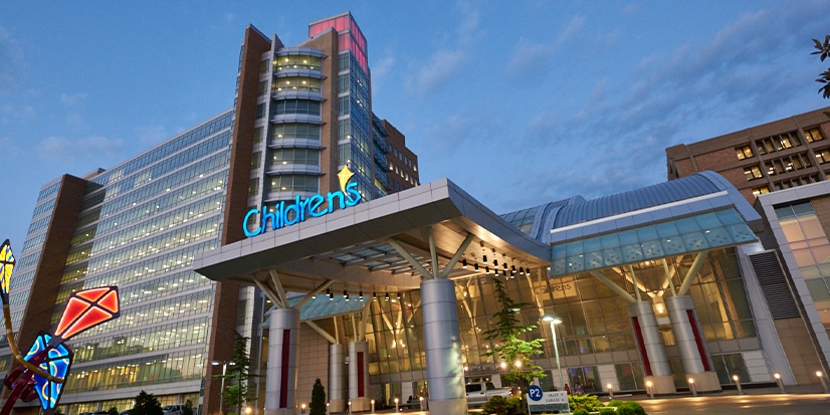
team at Oklahoma Children’s Hospital OU Health’s in Oklahoma
City to care for pediatric vascular anomalies.
Pediatric Vascular Malformations
Vascular malformations are also growths of blood vessels. They also are
noncancerous. They are present at birth. They’re also called birthmarks.
But they may not be seen for months or weeks after birth. They grow slowly
throughout life. They don’t shrink. There are 5 types of vascular
malformations. They are:
Capillary malformations - When tiny blood vessels form a red or purple mark on the skin. It’s
also called a port wine stain (red or purple in color)
Venous malformations - This is when veins form an abnormal lump under the skin or in another
part of the body
Lymphatic malformations - When lymph vessels form an abnormal lump under the skin or in another
part of the body
Arteriovenous malformations (AVM) - When veins and arteries have an abnormal connection. They form a lump
under the skin or in another part of the body
Mixed malformations - A combination of any of the types
Symptoms and Diagnosis of Hemangiomas and Vascular Malformations
Hemangiomas start as faint, red birthmarks. Then they grow very fast. Over
time, they become smaller and lighter in color. Vascular malformations
are also birthmarks. They grow much more slowly than hemangiomas. They
don’t shrink.
Your child’s healthcare provider will diagnose your child’s
skin growth. The diagnosis will be based on how it looks and if it changes
over time. Your child may need to have an ultrasound. This can help the
healthcare provider make the diagnosis.
Hemangiomas and Vascular Malformations Treatment
Treatment will depend on your child’s symptoms, age, and general
health. It will also depend on how severe the condition is.
Treatment for hemangiomas also depends on their size, location, and how severe they are. Small hemangiomas
often shrink on their own. These usually don’t need treatment.
If your child has a hemangioma near their eyes or airway, it may need to
be treated. You and your child’s healthcare provider may consider:
Steroid medicines
Injection into the hemangioma (blood vessel embolization)
Laser or surgical removal
Treatment for vascular malformations depends on the type of malformation. If your child has a large or life-threatening
growth, they may need a team of healthcare providers. These can include
plastic surgeons, skin care providers (dermatologists), eye care providers
(ophthalmologists), and other specialists. Your child may need a combination
of treatments. These may include:
Laser therapy - Used for port wine stains
Injection into the vascular malformation - Used for arterial malformations
Injection of a clotting (sclerosing) medicine - Used for venous malformations
Pediatric Vascular Tumors
Pediatric vascular tumors are growths that can appear in the blood vessels
of children. These tumors can be either benign (not cancerous) or malignant
(cancerous). Benign tumors, like hemangiomas, often look like red or purple
marks on the skin and usually go away on their own. Malignant tumors,
such as angiosarcomas, are rare but can spread to other parts of the body
and need special treatment.
Treatment for Pediatric Vascular Tumors
Depending on the needs of the patient and what your OU Health may recommend
the use of different methods to treat these tumors, depending on their
type and location. Treatments can include medications, surgery, or laser therapy.
The pediatric team treats the following vascular tumors:
As your child or teen receives cancer care and treatment from your extensively
experienced Oklahoma Children’s Hospital, you may work with children’s
oncology and other pediatric healthcare professionals, including board-certified
and fellowship-trained pediatric hematologist-oncologists, pediatric surgeons,
urologists, radiation oncologists, radiologists, anesthesiologists and
pathologists.
Your comprehensive care team also may include certified pediatric oncology
nurses, social workers, child life specialists, parent liaisons,
spiritual care (chaplains), nurse practitioners, physician assistants. Everyone focuses on helping
achieve the best possible outcomes for your child’s particular situation
while keeping your family close.
.png)



 5 out of 5








.png)