From Ranch Life to Recovery – Tonette’s Journey With Kidney Cancer
- Category: Blog
- Posted On:

When 51-year-old Tonette George of Konawa, Oklahoma, first experienced back pain so severe she had to pick up her foot to put it on the accelerator and the brake of her car, she thought she had simply injured her sciatic nerve. As an active woman who spent most of her time outdoors with her family, tending to horses and dogs on their ranch, she assumed it was just the result of hard work.
"I thought maybe I just kind of hurt myself working hard," Tonette said. "I couldn’t even sit on a couch or in a recliner because it hurt so bad. But we work outside a lot, and I thought I just pulled a nerve.”
It was Tonette's daughter, Bunny, who finally convinced her to go to the emergency room. What started as a trip to investigate back pain led to a life-changing discovery. Tonette had renal cell carcinoma, a type of kidney cancer.
For many people, hearing the word "cancer" is devastating. For Tonette, a Seminole Nation of Oklahoma citizen who is also half Irish, it was no different.
"When you hear that you [have] cancer, those words, it just does something to you," she said. "I cried for two weeks straight. I didn't tell anybody, just my husband, because I felt like I needed to be positive."
As a woman of faith whose husband was a pastor, Tonette turned to prayer and a positive mindset to guide her through the difficult time.
"Whether I live or die, I said, it didn't matter. I said, ‘I’m still going to serve the Lord. If I stay here, I will still serve the Lord and tell people about Jesus. I said, if I die, I'll be with him,’" she said.
Finding the Right Care
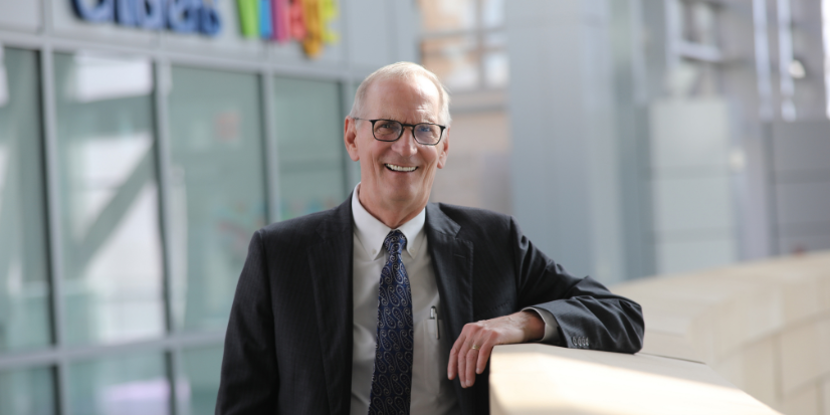
Luckily, she didn’t have to face that choice. Tonette was referred to Southern Oklahoma Urology Clinic, who then sent her to see urologic oncologist Dr. Michael Cookson, M.D., professor and Chair of the Department of Urology at the University of Oklahoma College of Medicine and Chief of Urology at OU Health Stephenson Cancer Center in Oklahoma City.
"Dr. Cookson told me, 'We're going to get a biopsy, and we're going to go in and attack it aggressively,” Tonette said. “He said, ‘I think there's a small window of opportunity for you and we may be able to save most your kidney.’"
This possibility was exactly what Tonette and her husband had been praying for. As a diabetic, Tonette's husband knew preserving kidney function would be crucial for her long-term health.
A Success Story in Early Detection
Dr. Cookson said Tonette's case illustrates the importance of early detection, especially for Native Americans, who face significantly higher rates of kidney cancer.
"In Oklahoma … we don't get to the cancers early in most cases, and they're discovered too late," Dr. Cookson said. "The problem is that we have a high mortality rate, because cancers are more advanced at discovery and then the treatments are more limited."
According to Dr. Cookson, the cancer death rates amongst American Indian and Native Americans, for just kidney cancer alone, are 154 times higher than the average population. These disparities stem from various factors, including access to care and delayed diagnosis.
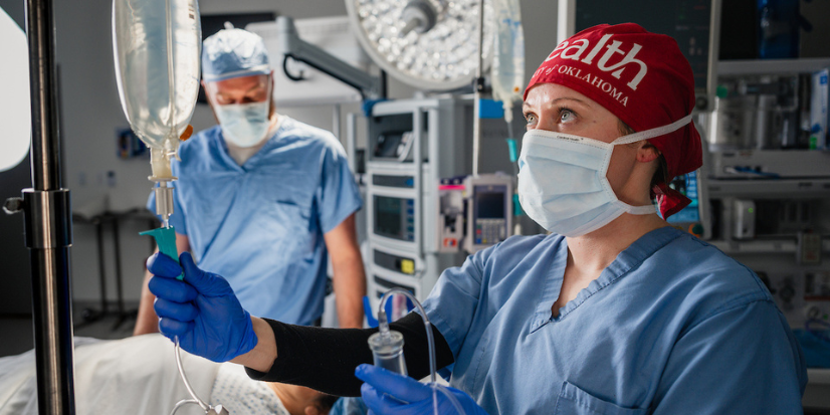
On December 7, 2017, she underwent surgery to remove only the cancerous portion of her kidney while preserving healthy tissue. The surgery was performed using minimally invasive techniques, showcasing the advanced care available at OU Health Stephenson Cancer Center. It also helped preserve more healthy kidney tissue.
Dr. Cookson said that the cancer had not spread beyond her kidney because it was discovered early. This made the likelihood of a cure greater.
"We have the busiest minimally invasive surgical practice in the state," Dr. Cookson said. "We do robotic surgery for prostate and kidney and bladder in urology. Some people are afraid to get treatment because they think it's going to be too invasive, but with these techniques, hospital stays are significantly less. The recovery and getting back to work is much quicker."
Life After Cancer
Five months after her surgery, despite Dr. Cookson's recommendation to wait until summer, Tonette was back on her horse.
"I got on Mother's Day. That was the best day of my life," she said with a smile.
Now, more than seven years later, Tonette remains cancer-free, returning for annual check-ups with Dr. Cookson.
Today, Tonette wants others, especially Native Americans, to know the importance of early detection and proper medical care.
"Make sure you get in and see the right doctor," she said. "I'm just thankful they set me up here, and I'm thankful that they told me there was a small window of opportunity."
Dr. Cookson sees Tonette's story as one that can inspire others and potentially save lives.
"She is a success story, and that's why I wanted to help her come forward," he said. "Her cancer was detected early. She got treatment. She's going to live a long, good life and not have to worry about that problem."
He emphasizes that this level of care should be available to everyone, regardless of where they live.
"Your ZIP code shouldn't dictate your ultimate outcome," Dr. Cookson said.
This is especially important for Oklahoma's Native American population, who can benefit from the specialized care at centers like OU Health Stephenson Cancer Center, Oklahoma’s only NCI-Designated Cancer Center.
For Tonette, her journey with kidney cancer reinforced her faith and gratitude for life.
"I'm just glad to be here," she says simply. "I'm so thankful for great doctors like him."
If you notice blood in your urine, persistent back or side pain, or other unusual symptoms, don’t wait. Early detection of kidney cancer can save lives. Contact the OU Health Urology Clinic or call OU Health Stephenson Cancer Center —Oklahoma’s only NCI-Designated Cancer Center—for expert evaluation and care. Call (405) 271-1112 to schedule an appointment or get a second opinion.