Regaining Independence With Deep Brain Stimulation (DBS): DaLana’s Battle Against Parkinson’s
- Category: Blog
- Posted On:
-DaLana-s-Battle-Against-Parkinson-s.png)
DaLana Sharp was just 54 when she was diagnosed with Parkinson’s disease 13 years ago — younger than the average age of around 60. Her symptoms began with tremors on her left side, and she knew they would get worse over time. By 2024, she could no longer walk, feed herself, or get dressed. DaLana, who lives in Muldrow, Oklahoma, knew it was time to find a treatment that could help her regain some independence.
What is Parkinson’s Disease?
Parkinson's disease is a brain disorder that affects movement and slowly gets worse over time. It happens when certain nerve cells in a deep part of the brain called the substantia nigra, stop working or die. These cells make dopamine, a chemical messenger that helps control movement. Without enough dopamine, it becomes harder to move the way you want to.
Symptoms of Parkinson’s disease include:
- Tremors – shaking, usually starting in the hands or fingers.
- Slowed movement (also called bradykinesia) – trouble with simple tasks, like getting out of a chair.
- Stiff muscles – tightness and pain that can make movements short and jerky.
- Poor posture and balance – a stooped posture and balance problems, which increase the risk of falling.
- Loss of automatic movements – less blinking, smiling, swallowing, or arm swinging while walking.
- Speech changes – soft, slurred, or flat-sounding speech.
- Writing changes – small, cramped handwriting.
Parkinson’s disease can also cause non-motor symptoms. These include feeling sad or anxious, trouble sleeping, constipation, needing to urinate often, trouble smelling, memory or thinking problems, and extreme tiredness.
In the United States, about 1.1 million people are living with Parkinson’s disease, and around 90,000 are diagnosed each year. It is the second-most-common degenerative brain disorder after Alzheimer’s disease. For most people, the cause of Parkinson’s is unknown. Experts think it may be linked to a mix of a person’s age, genes, environment and sex.
Risk factors include:
- Age – The chance of getting Parkinson’s goes up as you get older. Most people are diagnosed around age 60, but symptoms can start as early as 50. In rare cases, it can happen in people under 50.
- Genetics – About 10% to 15% of cases are linked to genes. If a parent or sibling has Parkinson’s, your risk may be slightly higher.
- Environment – Head injuries may raise your risk, but experts aren’t sure why. Being around certain pesticides or industrial chemicals for a long time might also raise the risk slightly.
- Sex – Men are more likely than women to get Parkinson’s disease.
Common Treatments — and a Life-Changing Choice
Common treatments for Parkinson’s disease include medications that boost or mimic dopamine in the brain. Physical, occupational, and speech therapies can help manage symptoms and improve daily life. Some people also benefit from botulinum toxin injections to help with uncontrolled movements. For DaLana, the most promising treatment was deep brain stimulation (DBS).
While DBS is not a cure, it can ease symptoms like shaking, stiffness, and slow movement — especially when medications aren’t working well. By sending electrical signals to the brain, it can help improve movement and quality of life.
DaLana’s younger brother also had Parkinson’s. His symptoms started on the left side of his body, just like hers. He had DBS and saw a big improvement. After seeing how much it helped him, 66-year-old DaLana decided to have the surgery too.
“I was at the stage where my husband had to feed me and dress me,” said DaLana. “He was so great, but I didn’t want him to have to do that. I couldn’t walk without a walker and some days I needed a wheelchair. I had to do something.”
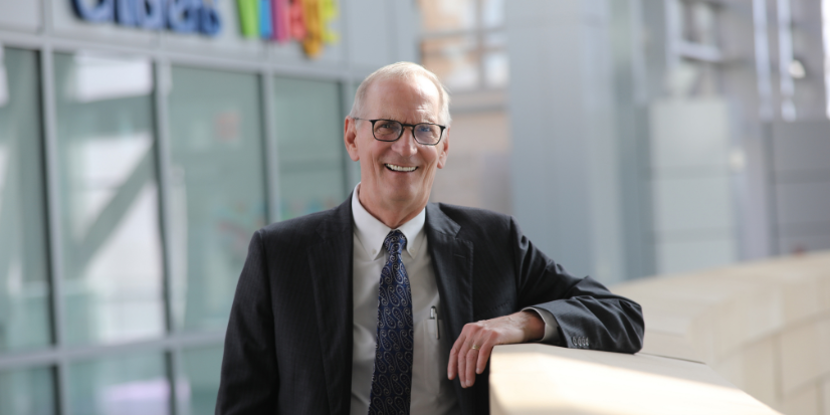
In March 2024, DaLana had DBS done by OU Health neurosurgeon Dr. Andrew Conner, M.D., assistant professor in the Department of Neurosurgery at the University of Oklahoma College of Medicine.
“Mrs. Sharp was a good candidate for DBS implantation,” said Dr. Conner. “Her Parkinson’s disease had progressed to the point where she developed motor/movement fluctuations in addition to medication resistant slowness called bradykinesia, and tremor.”
How Does Deep Brain Stimulation Surgery Work?
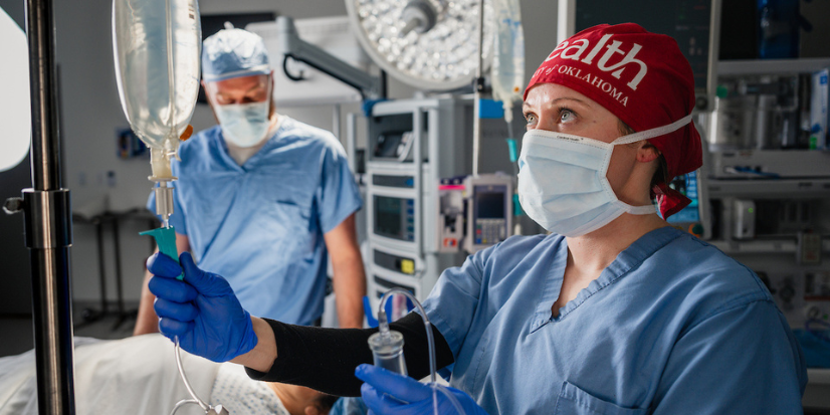
The surgery happens in two parts. First, the electrodes are placed in the brain using MRI or CT scans to guide the surgeon. Two weeks later, the wires are connected to a small device under the skin. A neurologist then programs the device to fit the patient’s needs.
DaLana’s first surgery took about five hours and was done under anesthesia. Once the device was fully connected, the change was immediate.
“My shaking has quit,” she said. “I can feed myself. I can walk. Now I'm out running a chainsaw and working in my pasture and doing stuff that I need to be doing. I'm just tickled I can do what I want to do."
DaLana sees her neurologist a few times a year to check the settings. If her symptoms come back, the device can be adjusted, giving her more control over her condition.
“Deep brain stimulation is a great option to improve patient’s quality of life with Parkinson’s disease,” explained Dr. Conner.
Innovation in Action: New Tools for DBS Surgery
Dr. Conner used ClearPoint Neuro, Inc. SmartFrame OR Stereotactic System to place electrodes very accurately. This system uses a small, disposable mount on the skull and special imaging tools that show real-time pictures of the brain. Because of this, patients don’t need to be awake during surgery, making it safer and less stressful for them.
“Dr. Conner was fantastic,” said DaLana. “He explained step-by-step what would happen, and I knew what to expect. Anybody that has Parkinson’s disease and is at the point where they can’t manage the symptoms, I’d say to definitely have the surgery.”
Before the SmartFrame OR system, DBS surgery used a metal frame attached to the patient’s head to guide where the electrodes went. Doctors used scans taken before surgery and did manual calculations to find the right spot in the brain. Patients were often awake during the surgery to help doctors adjust the electrodes. This method worked but could be less comfortable and less exact.
The SmartFrame OR system helps surgeons work quickly and precisely. This can lead to shorter operations, fewer problems, and better results. It also connects with electronic health records to help the medical team work better together.
Leading Care for Movement Disorders at OU Health
OU Health leads the way in using advanced technology and treatments to help people with movement disorders like Parkinson’s disease. It is the first health system in the world to adopt the SmartFrame OR system and Dr. Conner was among the first surgeons to use it in a study submitted to the FDA.
“This new technology represents a leap forward for DBS surgery,” said Dr. Conner. “It offers incredibly accurate, consistent, and reliable results. It truly is a game changer.”
By using new methods, OU Health sets high standards in patient care and treatment options. This commitment creates new possibilities for patients to live life more fully.
Find out more about your options for movement disorders
or make an appointment with one of our specialists.