Supporting Baby Benton’s Growth with OU Health’s Comprehensive Care for CLIFAHDD Syndrome

When baby Benton Contreras was born seven weeks early, his parents Ren and Sarah knew he had some congenital anomalies and would need specialized care. What they didn’t expect was a diagnosis so rare that fewer than 60 children worldwide have ever been identified with it. Benton is number 52.
The diagnosis was Congenital Contractures of the Limbs and Face, Hypotonia, and Developmental Delay (CLIFAHDD syndrome), caused by a mutation in the NALCN gene. The disorder affects many parts of the body, leading to serious muscle weakness and delays in development. Because it’s so rare, not much medical guidance exists for treatment. That’s why Oklahoma Children’s OU Health took action, bringing together a full team of specialists to manage Benton’s care from the start.
What Is CLIFAHDD Syndrome?
CLIFAHDD is a rare genetic condition caused by a change (mutation) in the NALCN gene, which helps control how nerve cells send signals in the body.
This mutation usually happens randomly and is not inherited from parents.
The NALCN gene gives instructions for making a tiny gateway in nerve cells called a sodium channel. This gateway helps control important body functions like breathing, muscle strength, and movement. If the gene doesn’t work right, problems can occur with how the brain and muscles grow and work.
Common symptoms
Children with CLIFAHDD may show a variety of symptoms:
- Developmental delays – slower progress in walking, talking, and learning
- Low muscle tone (hypotonia) – muscles may feel floppy or weak
- Joint contractures – stiff or bent joints, such as clubfoot or bent fingers
- Distinct facial features, which may include a high forehead, flat nasal bridge, downturned mouth, and arched eyebrows
- Breathing problems – irregular breathing or sleep apnea
- Feeding difficulties – may need help with eating or swallowing
- Constipation – often persistent and may need treatment
- Seizures or movement issues – such as tremors, stiffness, or poor coordination
- Increased drooling – sometimes treated with medication or Botox
Diagnosis is usually made through genetic testing. While there is no cure, treatment focuses on managing symptoms and supporting development.
A Team Approach to Benton’s Care
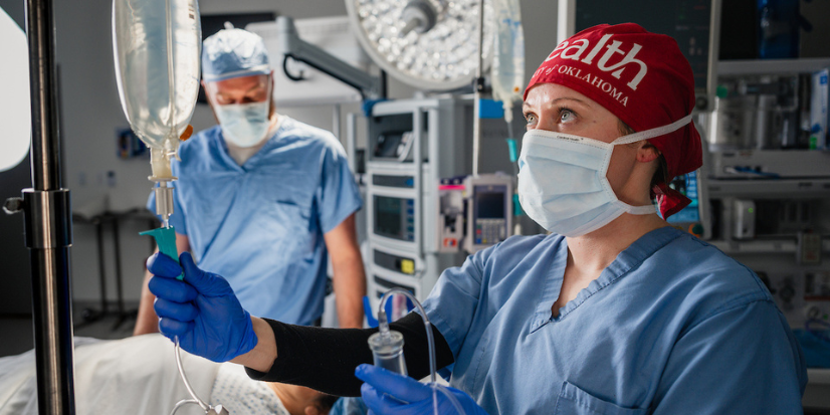
Benton spent the first three months of his life in the Neonatal Intensive Care Unit (NICU) and another two months in the Pediatric ICU (PICU) and Transitional Care Unit at Oklahoma Children’s. His first weeks involved constant adjustments to his breathing support and ultimately a tracheostomy and ventilator to protect his airway.
But, Benton had a huge team of experts caring for him.
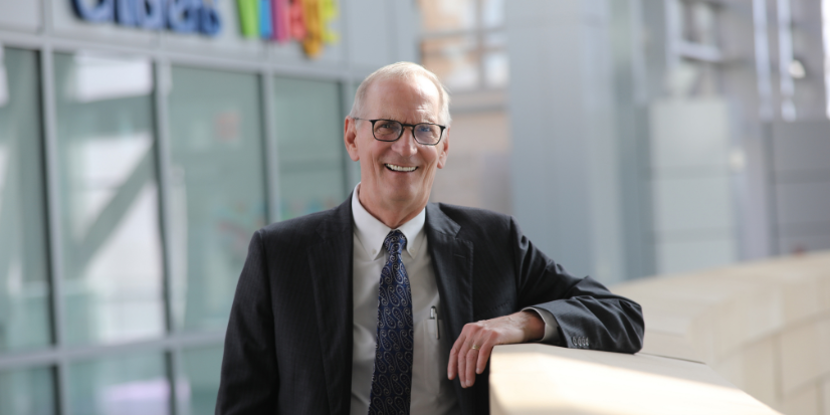
“Benton’s condition affects nearly every organ system,” said complex critical care pediatrician Dr. Amanda Page, M.D., clinical associate professor in the Section of Pediatric Critical Care at the University of Oklahoma College of Medicine. “He needed support from more than a dozen subspecialties including neonatology, pulmonology, neurology, genetics, cardiology, surgery, gastroenterology, and more. That level of integration is what makes Oklahoma Children’s the right place for children like Benton.”
The care team also coordinated long-term plans for Benton’s growth, therapies, and medical equipment needs.
From Hospital to Home: Turning Parents into Experts
Preparing families like Sarah and Ren for home care begins long before discharge. OU Health, the University of Oklahoma’s academic health system, offers a Transitional Care Program that combines hands-on education, simulation, and emotional support to ensure families can safely manage complex medical equipment at home.
Pediatric critical care intensivist Dr. Theresa Graif, M.D., assistant professor in the Department of Pediatrics at the OU College of Medicine and medical director of the Transitional Care Unit at Oklahoma Children's, was heavily involved in Benton’s care.
“For families of children on ventilators, we’re essentially training them to run a mini-ICU in their living room,” she said. “They learn to troubleshoot equipment, respond to emergencies, and handle every scenario with confidence. Families leave here equipped, supported, and connected, not just discharged.”
Sarah and Ren completed more than 40 hours of direct instruction and practice with respiratory therapist Shealynn Garrett, who guided them through every detail of Benton’s care.
“Shealynn worked with us every single day to make sure we knew what we’d need to do when we left the hospital,” Sarah said. “She’s the reason we can do what we do. She gave us the knowledge and confidence to take care of Benton safely. We’ll be forever grateful for her.”
Together, they learned to change a tracheostomy tube, manage ventilator settings, perform suctioning, and identify warning signs of distress.
“We teach parents how to handle tracheostomy emergencies, manage ventilators, and recognize when their child needs help,” Garrett said. “It’s truly life-saving knowledge and it allows families to bring their children home with confidence.”
Lifelong Support Through Coordinated Care
OU Health goes beyond training by ensuring families have what they need to thrive at home. Through its philanthropy fund, the hospital provided Sarah and Ren with essential resources, including a specialized medical-grade wagon to transport Benton’s ventilator and oxygen and a portable generator to keep his equipment running in case of a power outage.
“That generator means everything,” Sarah said. “If the power ever goes out, Benton’s life literally depends on it. OU Health thought of that before we even did. They gave us the tools to keep him safe.”
Sarah and Ren continue to take Benton for follow-up appointments, therapy sessions, and developmental evaluations. At home, they manage his ventilator and feeding equipment with skill and calm confidence.
“We’ve had to change our plans for the future, but that’s okay,” Sarah said. “OU Health helped us see that we can still have a beautiful, full life together.”
Why Families Choose OU Health for Complex Pediatric Care
OU Health is the only hospital in Oklahoma — and one of few nationwide — offering this level of comprehensive, multidisciplinary pediatric expertise. From genetic testing and neonatal intensive care to long-term respiratory management and developmental support, OU Health is equipped to guide families through every stage of even the most complex medical journeys.
Because CLIFAHDD syndrome is so rare, OU Health’s coordinated model allows Benton’s care to evolve as he grows. Specialists from neurology, pulmonology, genetics, and developmental medicine meet regularly to track his progress and adjust his plan.
“These are children who will need care across their entire lifespan,” Dr. Page said. “At OU Health, that continuity across specialties, across time is built in. Families like Benton’s aren’t starting over with every new stage.”
Expert Care for Rare Genetic Conditions at OU Health
At OU Health, our genetics team partners with specialists across multiple disciplines to provide comprehensive care for children with rare genetic and metabolic conditions. Whether in person or via telemedicine, we offer expert consultations and accurate, lab-supported results to guide your child’s personalized treatment plan.
Learn more about specialty genetic services at Oklahoma Children’s, the state’s most comprehensive pediatric hospital and group of pediatric experts, or call (405) 271-5437 to speak with a specialist.