
Paving the Way from Bench to Bedside for Patients With Advanced Cancer
- Category: Blog
- Posted On:
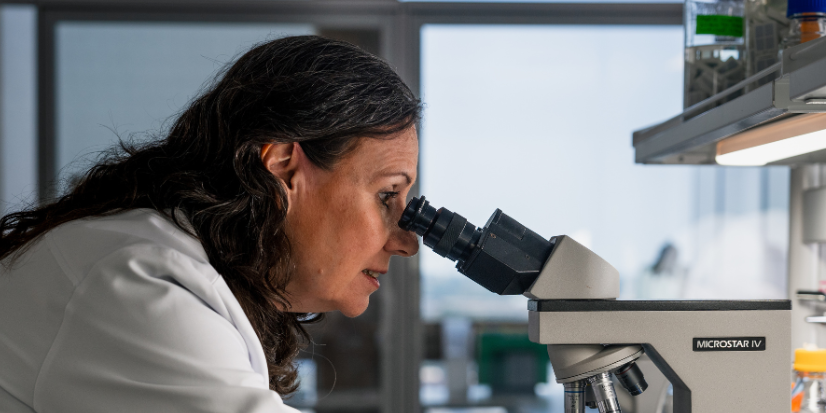
Bench to bedside – a term used in academic medicine to signify scientific discoveries that begin at the laboratory “bench” and ultimately make their way into patient care – describes the accomplishments of Doris Benbrook, Ph.D.
Benbrook has achieved a rare feat – developing a novel cancer drug entirely within Oklahoma, without the backing of a major pharmaceutical company. The drug, called OK-1, is now in Phase 1 clinical trials at OU Health Stephenson Cancer Center, offering new hope for patients with advanced cancer.
Stephenson Cancer Center is part of the University of Oklahoma’s academic health system, OU Health, which advances a three-part mission of research, education and patient care. As Oklahoma’s only academic health system, OU Health embodies a mindset of never done, never outdone — continuously pushing forward discoveries that shape care for our neighbors while setting the standard nationally.
Benbrook’s journey began over 30 years ago with the goal of creating a safer, more effective cancer drug. Traditional chemotherapy drugs often harm healthy cells, leading to severe side effects. OK-1 is different – it targets cancer cells while sparing normal cells, potentially revolutionizing cancer treatment.
OK-1 is derived from vitamin A, which the body naturally converts into retinoic acid, a compound that supports cell health. Some retinoic acid-based drugs have been used to treat leukemia, but they are often highly toxic. Benbrook and her team modified the chemical structure of retinoic acid to create OK-1, which works in an entirely new way.
Cancer cells rely on “chaperone proteins” – protective molecules that shield them from the body’s natural defenses. OK-1 attaches to these proteins, disabling their protection and making cancer cells more vulnerable. Because healthy cells don’t rely on these chaperone proteins, OK-1 doesn’t harm normal tissue, thereby reducing toxicity.
The development of OK-1 was supported by tens of millions of dollars in grants from the National Cancer Institute, along with critical research from collaborators at the OU College of Pharmacy. If successful in clinical trials, OK-1 could become a game-changing treatment option.
“It is very exciting to reach the point where we can test OK-1 in a clinical trial,” Benbrook said. “We hope to improve the way we treat cancer patients.”
Her work demonstrates OU Health’s promise to heal Oklahoma, one breakthrough at a time. Serving all 77 counties and beyond, OU Health delivers healing and discovery that reach far beyond the laboratory.
Learn More About Academic Health in Oklahoma
Want to explore our clinical care, education, and research missions?
Benbrook is a Presbyterian Presidential Professor in the Department of Obstetrics of Gynecology at the OU College of Medicine. She is also Associate Director for Translational Research at OU Health Stephenson Cancer Center, the only National Cancer Institute-designated cancer center in Oklahoma.